

About
Our Mission
To deliver high-quality homes for people in housing need, while building a resilient and scalable social infrastructure platform for long-term capital. Every opportunity we pursue is assessed through both a social impact lens and a rigorous real estate investment framework.

Our Platform
Through an integrated network of businesses spanning investment, asset management, construction and care delivery, Jenyo Capital is able to execute the full lifecycle of social infrastructure delivery.
Our Investment Focus
Our Investment Focus
Demand-Led. Partnership-Driven. Impact-focussed.
Transforming underused property into essential social housing
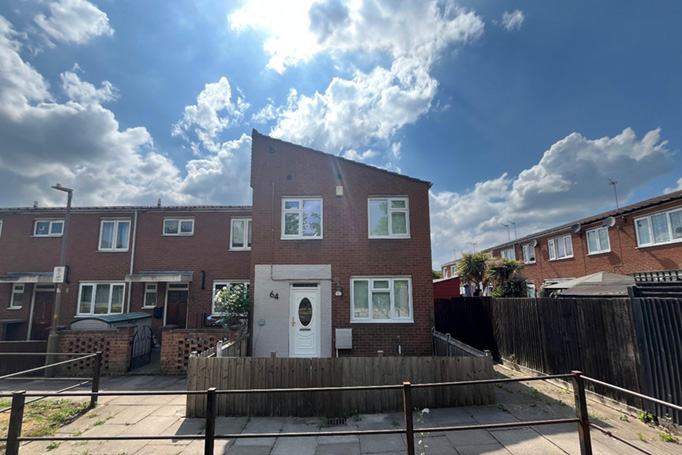
Jenyo Capital identifies well-located residential and commercial properties that can be repositioned into social housing, such as supported, specialist and affordable housing. Our approach is demand-led from the outset – capital is deployed where evidenced public-sector demand, planning suitability and operating economics align.
Jenyo Capital holds strategic interests in specialist operators across development, asset management and care delivery. This network gives the platform direct visibility into pricing, deliverability and operating performance – capabilities typically outsourced to third parties – and underwrites execution certainty from origination through to stabilisation.

Why We Exist
Addressing the UK's Growing Housing Crisis
Closing a Structural Gap in UK Housing Provision
UK Local Authorities carry a statutory obligation to house vulnerable adults, individuals with complex support needs and households in temporary accommodation. Conventional real estate capital has not addressed this segment, leaving councils dependent on high-cost, short-tenure emergency accommodation that is structurally misaligned with policy and budget constraints.
Jenyo Capital was established to deploy institutional-grade capital into this market. The platform pairs acquisition discipline with sector-specific operating capability to deliver in-community housing, generating long-duration, public-sector-supported cashflows.
Read more
Why We Exist
A platform built around public-sector housing need
The scale of unmet housing need across the UK is significant. Demand for supported living, temporary accommodation and affordable housing continues to outpace supply, while the cost of providing emergency and interim solutions places an ever-increasing burden on already stretched Local Authority budgets. Jenyo Capital's model is designed to provide a more sustainable, long-term alternative that delivers better outcomes at a lower cost to the public sector.
Our approach is grounded in the practical experience of The Cooperative Property Company, which has operated in the social housing sector since 2012 and has managed over £100 million of assets across supported, affordable and temporary accommodation schemes. This track record gives Jenyo Capital a meaningful advantage — we understand the complexities of the sector, the expectations of public-sector partners, and the operational requirements that determine whether a housing scheme truly succeeds.
Ultimately, we believe that well-structured, professionally managed social housing investment can deliver lasting value on multiple levels — providing safe, suitable homes for people in housing need, supporting Local Authorities in meeting their statutory obligations, and generating resilient, long-term returns for capital partners. This alignment of social purpose and investment discipline is what defines the Jenyo Capital platform.
An integrated delivery platform
The Opportunity Is Growing
The undersupply of UK social and supported housing is structural, not cyclical. Demand for Specialised Supported Housing (SSH) for people with a learning disability is projected to grow from c.38,500 units in 2015 to c.59,800 units by 2030 – a c.55% increase over fifteen years – with a forecast shortfall of c.27,000–-4,500 units by 2037 (Mencap / Housing LIN; LDAHN). Across the wider supported housing sector, total need is projected to grow c.33% by 2040, from c.510,000 units in 2023 to c.677,000 units, driven principally by ONS demographic projections for the over-60s cohort (Housing LIN, 2024).
The general-needs picture reinforces the same imbalance: England’s social housing waiting list stood at c.1.33 million households as at March 2024 – its highest level since 2014 – while annual delivery of new social rent homes has fallen from c.40,000 in 2010/11 to a net loss of c.650 units in 2023/24 (MHCLG; Crisis).
This is a multi-decade demand-supply imbalance anchored in statutory obligations (Care Act 2014, NHS Long Term Plan, Building the Right Support) and reinforced by demographic and policy tailwinds independent of the economic cycle. For institutional capital with the operating capability to execute, it represents a long-duration, public-sector-supported investment opportunity at scale.
Strategy
Jenyo Capital’s strategy is demand-led, operationally informed and partnership-driven. We identify well-located assets that can be repositioned into supported, specialist or affordable housing, adapt them for their intended use, and support their long-term performance through an integrated delivery platform. Every opportunity is assessed around evidenced housing need, public-sector priorities and long-term operational suitability.
Identify the Opportunity
We source underutilised residential and commercial assets in locations where Local Authorities and housing partners have a clear, acute and evidenced accommodation need.
Assess and Underwrite
Each acquisition target is rigorously evaluated across investment, operational and social criteria before we commit, ensuring each scheme has a viable and sustainable use case.
Adapt for Purpose
We work with experienced development and construction partners to refurbish or convert assets into safe, suitable and fit-for-purpose accommodation for the intended resident group.
Align Sector Partners
Each scheme is structured with the appropriate sector counterparties - whether public-sector, Registered Provider or operator-led - selected and engaged on a deal-by-deal basis to fit the asset profile and end-use.
Secure Long-Term Leases
We structure robust lease and nomination agreements with credible public-sector counterparties to underpin long-term occupancy, income stability and asset performance.
Manage and Steward
Through the wider platform, we provide ongoing asset management, compliance oversight and operational coordination to protect long-term quality for residents and stakeholders.
Measure Social Impact
We track and report on the social outcomes each scheme delivers, including Local Authority cost savings, resident pathways and community-based housing improvements.
Scale the Platform
We aggregate high-quality, demand-aligned assets into a diversified social housing portfolio built for durable social impact and long-term institutional ownership.
Our Impact
Units
+
social housing solutions across supported, affordable and temporary accommodation through The Cooperative Property Company
Assets
£
m+
under management across supported, affordable and temporary accommodation throughout London, the South-East and East of England.
Local Authorities
+
Partnership experience with councils across London, the South-East and East of England delivering demand-led housing solutions.
Contact Us
Contact us
1 Knightsbridge Green
London
SW1X 7QAinfo@jenyocapital.com